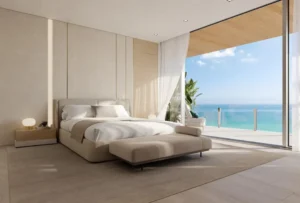
Something remarkable is happening at the intersection of luxury living and global wealth.
Quietly at first, and now unmistakably, branded hotel residences have moved from a niche curiosity to one of the most talked-about asset classes in high-end real estate.
Across Miami, New York, Aspen, Dubai, London, and emerging lifestyle capitals around the world, a growing number of sophisticated buyers are making the same decision. They are choosing branded hotel residences not just because they are beautiful, but because they make sense.
In 2026, this category is no longer about status alone. It is about performance, protection, and peace of mind.
The world’s most respected hotel brands are taking notice. Four Seasons, St. Regis, Aman, Six Senses, Ritz Carlton, Mandarin Oriental, and 1 Hotels are expanding their residential footprints at a speed rarely seen before. These are not speculative moves. They reflect a surge in demand from ultra high net worth individuals, global families, and investors who see branded residences as a smarter place to park capital in an unpredictable world.
A Shift Toward Trust in an Uncertain Global Market
Luxury buyers today are not searching for novelty. They are searching for reliability.
As global markets fluctuate, geopolitical uncertainty persists, and traditional real estate faces pressure from oversupply in certain regions, branded hotel residences offer something uniquely reassuring. They are backed by names people already trust. They follow consistent standards of design, service, and management. And they cater to a clientele that values experience over experimentation.
This trust factor is proving critical.
Unlike traditional condominiums, which can be vulnerable to management issues or market saturation, branded residences benefit from professional hotel-level oversight. Standards do not slip. Service expectations are upheld. Properties age better. And resale demand remains strong even during slower market cycles.
Financial advisors are increasingly pointing clients toward branded residences as a luxury safe-haven asset. Not a guarantee, but a buffer. Not a gamble, but a calculated move.
Why Rental Performance Is Drawing Investor Attention
One of the most compelling reasons investors are leaning into branded hotel residences is their rental performance.
These are not standard short-term rentals. They are part of fully integrated hospitality ecosystems.
Guests booking a residence within a five-star hotel environment are not simply renting space. They are buying into an experience they already recognize and trust. That recognition translates into higher nightly rates, longer stays, and more consistent demand throughout the year.
At Resivate, performance data tells a clear story. In prime markets, luxury hotel residences often outperform traditional short-term rentals by a significant margin. In some locations, we see revenue premiums approaching thirty to seventy percent depending on the brand, destination, and management structure.
The reason is simple. Experience sells.
When travelers know what they are getting, they are willing to pay more for it. That dynamic benefits owners directly.
The Appeal of Truly Hands-Off Ownership
A growing number of luxury investors share one thing in common. They are tired of micromanagement.
Traditional rental ownership often comes with hidden friction. Coordinating maintenance. Managing housekeeping. Handling guest issues. Navigating marketing platforms. These tasks add up quickly, especially for owners with properties across multiple cities or countries.
Branded hotel residences take that burden away.
Full service concierge teams manage guest interactions. Professional housekeeping and engineering teams handle upkeep. Security, dining services, and rental operations are built into the property’s DNA. Owners can use their residences when they wish and place them into a professionally run program when they are away.
This seamless ownership model is a major draw for global investors who value efficiency as much as returns. In many cases, it is the deciding factor.
Scarcity Is Quietly Doing the Heavy Lifting
One of the least discussed but most powerful drivers of branded residence value is scarcity.
Despite rapid expansion, branded hotel residences still represent a very small fraction of global housing supply. Development standards are high. Prime locations are finite. Brands are selective about where and how they build.
At the same time, global wealth continues to rise. Ultra high net worth populations are growing, particularly in regions seeking stable, internationally recognized assets.
When limited supply meets expanding demand, values tend to hold firm and often rise over time. This fundamental economic truth underpins much of the long-term appeal of branded residences.
They are rare by design, and rarity creates leverage.
A Lifestyle That Strengthens the Investment Case
Perhaps the most compelling aspect of branded hotel residences is that they do not feel like investments in the traditional sense.
Owners actually want to use them.
These residences offer elevated design, thoughtful layouts, and access to best-in-class amenities. Wellness programs, award-winning spas, curated dining, and hospitality-level service become part of everyday life. The experience feels effortless and indulgent, without sacrificing practicality.
This dual-purpose nature sets branded residences apart. Owners can enjoy the property themselves while still benefitting from appreciation and income potential. It is a blend of personal enjoyment and financial logic that few other asset classes can offer.
Wellness Is No Longer Optional in Luxury Real Estate
Another trend shaping this category is the rise of wellness-focused living.
Buyers today are paying closer attention to how spaces affect their health and longevity. In response, leading hotel brands have woven wellness into the core of their residential offerings.
From biophilic design and eco-conscious materials to advanced air and water systems, branded residences increasingly reflect modern lifestyle values. Spa-level amenities, longevity programs, and wellness experiences are no longer extras. They are expectations.
For investors, this focus adds another layer of future-proofing. Wellness is not a passing trend. It is becoming central to how people evaluate luxury living.
Where Resivate Fits Into This Story
As interest in branded hotel residences accelerates, the market has become more complex. Opportunities vary widely by location, brand, and structure. Not all branded residences perform equally.
Resivate was created to bring clarity to this evolving landscape.
As the world’s first platform dedicated exclusively to luxury hotel residences, Resivate allows investors to buy, rent, and invest with insight rather than assumption. We analyze global markets daily, track occupancy and yield trends, evaluate brand strength, and assess long-term resale dynamics.
By combining data with on-the-ground expertise, Resivate helps investors identify properties that align with both financial objectives and lifestyle goals. In a fast-moving global market, that perspective matters.
The Editorial Verdict
As 2026 approaches, branded hotel residences stand at the center of a quiet but powerful shift in luxury real estate.
They offer structure in uncertain times. Performance in competitive markets. A lifestyle that enhances everyday living. And scarcity that underpins long-term value.
This is not merely a trend. It is a recalibration of what luxury ownership looks like in a globalized world.
And increasingly, the most informed investors are paying attention.
FAQ 1: What are branded hotel residences?
Branded hotel residences are privately owned homes located within luxury hotels and managed by globally recognized hospitality brands. Owners receive hotel-level services, access to amenities, and the option to place the residence into a professionally run rental program. This creates a blend of lifestyle convenience and investment performance.
FAQ 2: Why are branded hotel residences becoming so popular with global investors?
Investors are choosing branded hotel residences because they offer stronger rental performance, reliable service standards, long-term asset protection, and hands-off ownership. Backing from trusted hotel brands creates stability in uncertain markets and supports consistent resale demandLorem ipsum dolor sit amet, consectetur adipiscing elit. Ut elit tellus, luctus nec ullamcorper mattis, pulvinar dapibus leo.
FAQ 3: Do branded residences rent better than traditional short-term rentals?
Yes. Branded residences consistently outperform traditional short-term rentals due to brand recognition, five-star service, and integrated hospitality experiences. Travelers pay premium rates for consistency, elevated design, and the trust associated with major hotel brands.
FAQ 4: Are branded hotel residences a safe investment?
While no investment is risk-free, branded hotel residences are considered a resilient luxury asset class. They benefit from strong brand oversight, scarcity of supply, stable demand from global wealth markets, and superior rental performance, making them a strategic hedge in uncertain environments.
FAQ 5: What makes ownership in branded residences truly hands-off?
Owners benefit from full hotel-level operations, including housekeeping, maintenance, concierge services, guest management, security, and onsite rental programs. This minimizes friction and makes the investment suitable for international owners or those with multiple properties.
FAQ 6: Why is wellness becoming a major driver in branded residences?
Leading hotel brands now integrate wellness into design, amenities, and lifestyle programming. Buyers want properties that support health, longevity, and well-being, making wellness a core expectation rather than an optional feature.
FAQ 7: How does Resivate help buyers and investors?
Resivate is the first global platform dedicated to luxury hotel residences, offering market data, performance insights, brand analysis, and curated listings. Investors use Resivate to identify high-performing opportunities aligned with lifestyle and financial goals.